


Penetrating Damp
Find the source, stop the water and protect your home from mould!
Penetrating damp happens when water gets into a building from the outside, through walls, roofs or gaps in the structure. Unlike rising damp, which travels up from the ground, penetrating damp can appear anywhere in the building, from the basement right up to the top floor. At Crystal Damp Proofing & Basements Ltd, we find exactly where the water is getting in, stop it at its source and restore the damaged walls.
Penetrating Damp Survey


We carry out detailed surveys to diagnose the source and extent of penetrating damp in your property. Thanks to our team’s experience and specialist equipment, including thermal imaging cameras, we can pinpoint the problem precisely, even when it cannot be seen with the naked eye, before it leads to serious structural damage or health risks from mould and fungi.
Where and When Does Penetrating Damp Occur?
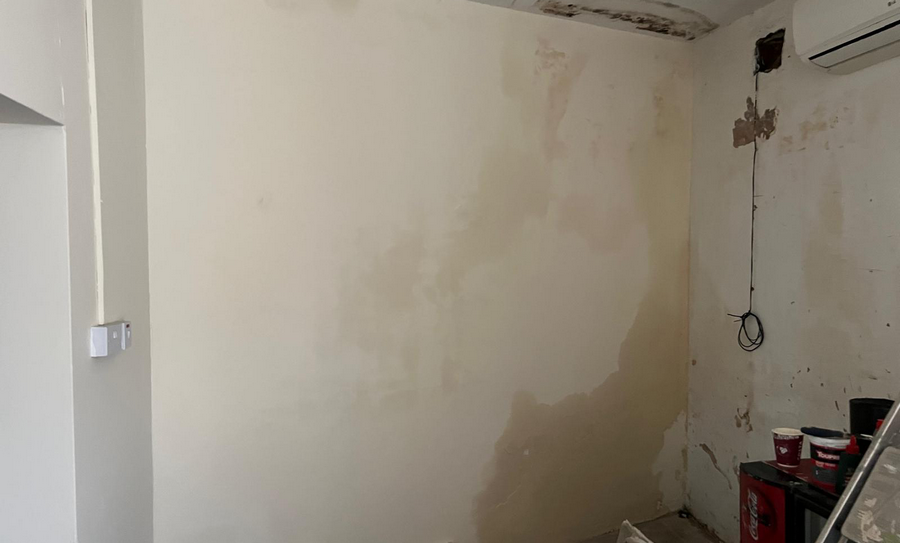
Penetrating damp most often appears around structural cracks and in places exposed to leaks and escaping water. It is usually very visible, showing as wet patches on walls or ceilings. A failed damp-proof course (DPC) can also let water migrate into the walls. Many older homes in London have a failing DPC, which can lead to a build-up of hygroscopic salts and also cause rising damp.
Why Does Penetrating Damp Appear High Up on Walls?
Damp on upper floors or high on walls is usually caused by the weather and by damage to the outside of the building:
- Damaged roofs and gutters: leaking roof coverings, faulty valleys and blocked or cracked gutters let water run straight down the walls or get under the roof covering.
- Strong winds and driving rain: higher parts of the building take the full force of the wind, which literally pushes rainwater into hairline cracks in the render, worn mortar joints and gaps in the facade.
- Leaks around windows: worn sealant, perished seals or poor installation on upper floors allow water to soak into the wall.
Do Wet Patches on Walls Always Mean Penetrating Damp?
Not always, but it is very likely. Wet patches can be a sign of several different problems:
- Penetrating damp: patches appear or grow noticeably after heavy rain. They can show up anywhere on the wall, often around windows, below ceilings or in corners.
- Condensation: patches and mould usually form at cold spots (thermal bridges), in room corners and behind furniture. They are caused by poor ventilation and high humidity indoors, not by rain.
- Plumbing leaks: if a patch stays wet and keeps growing whatever the weather, and sits near water or waste pipes, a leaking pipe is the likely cause.
What We Do About Penetrating Damp
Penetrating damp can only be cured by removing its source on the outside of the building.
We work step by step:
Step 1: Find and remove the cause (outside)
- Roofs and gutters: we identify defects in roof coverings, gutters and downpipes, and make sure rainwater is carried away from the walls.
- Facade repairs: we repair cracked render and repoint worn or crumbling brick joints.
- Windows and sills: we replace old sealant and seals around window frames and external sills.
- Water-repellent treatment: once the facade has been repaired, we can apply a clear, water-repellent facade treatment that keeps rain out while still letting the wall breathe.
Step 2: Dry and restore the inside (only once the leak has been stopped)
- Drying: we dry the affected walls with dehumidifiers and heaters, together with good ventilation.
- Removing damaged plaster: plaster that is flaking or coming away is stripped back to bare masonry.
- Treating mould: any mould or fungus is thoroughly treated with a specialist fungicidal product.
- New finishes: once the wall is completely dry, we apply new plaster or render and a breathable paint, such as a silicate paint.
Does the Plaster Have to Be Removed?
It depends on how badly it is damaged and what it is made of.
Plaster can usually be saved if the wall was only wet for a short time (for example after a single heavy downpour), the leak was stopped quickly, and the plaster still bonds firmly to the wall, is not flaking or crumbling, and shows no deep mould or salt deposits. In that case, we dry the wall, treat any surface mould and, once dry, make good and redecorate.
Plaster must be removed when:
- It is flaking, sweating or falling off: the damp has weakened the binder, so new filler or paint would simply come away.
- It sounds hollow: a hollow sound when tapped means the plaster has come away from the masonry.
- Mould has grown deep into it: if the wall was wet for weeks or months, spores have reached deep into the plaster, and surface cleaning will not stop the mould coming back.
- Salt deposits have appeared: water washes salts out of the building materials, which crystallise on and inside the plaster and break it up from within.
- It is gypsum plaster: gypsum absorbs water very easily, softens after heavy wetting and feeds mould, so it needs removing far more often than cement-lime plaster.
We check the plaster with a simple tap test: a clear, hard sound means it is sound; a dull, hollow sound means it needs to come off. When we remove plaster, we always take it off with a margin of around 50 cm around the visible patch, because the water inside the wall may have spread further.

How to Prevent Penetrating Damp
Regular checks of the facade, external render and vulnerable points such as flashings, gutters and the seals around windows and doors are essential, because this is where leaks most often start. Repairing small structural cracks early and keeping the rainwater drainage clear greatly reduce the risk of penetrating damp.
When Should You Call a Specialist?
Call a specialist as soon as you notice the first signs of damp, because any delay increases the risk of mould and structural damage. The diagnosis should be carried out by qualified experts like our CSSW-qualified team, who use thermal imaging to locate the source of penetrating damp precisely, even where it cannot be seen.
Penetrating Damp, Black Mould and Wood-Destroying Fungi
If penetrating damp is not found quickly enough, it can lead to black mould and other household fungi:
- Dry rot (Serpula lacrymans): forms large, fleshy fruiting bodies and strands that carry the water it needs to spread.
- Cellar fungus (Coniophora puteana): a wet rot that attacks floor and ceiling timbers, forming thin dark brown or black strands.
- Mine fungus (Antrodia sinuosa): has white or cream growth and turns timber to powder.
- Black mould (Stachybotrys chartarum): grows on cellulose-rich materials such as plasterboard and wallpaper after long-term wetting. It is dark green and highly toxic, producing harmful mycotoxins.
- Aspergillus: forms patches from black to yellow-green. Its spores are a strong allergen and can cause respiratory aspergillosis.
- Penicillium: a blue or greenish growth that quickly colonises damp plaster and paintwork.
Qualified Specialists & a 10-Year Guarantee

See What Our Clients Say
We are proud of our 5-star Google rating: see our reviews. If your basement is damp or takes in water, book a survey in our Booking Survey section, or call or message our fully qualified advisors.
