

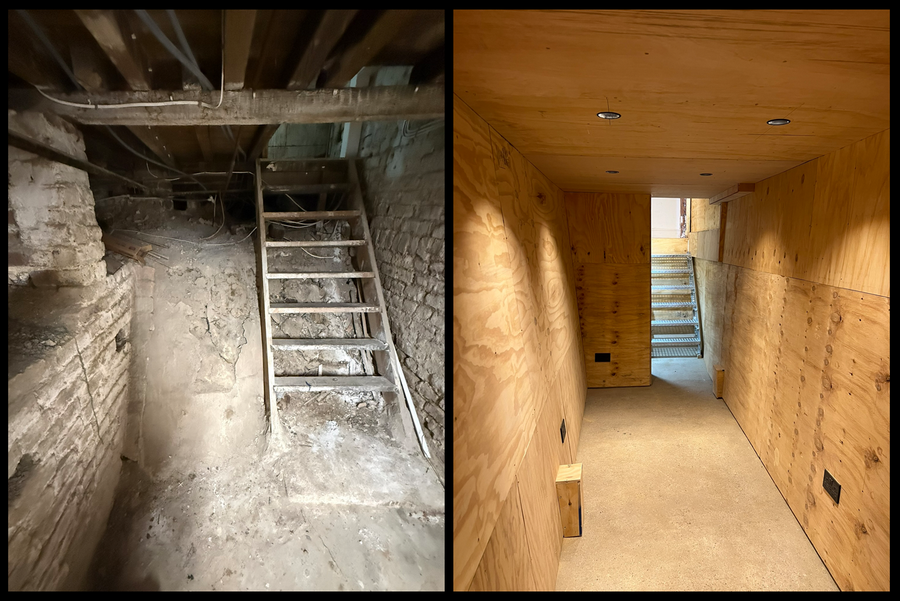
Cellar Waterproofing
Turn a damp or flooded cellar into a dry, usable space!
A damp cellar is more than an inconvenience. Water and moisture damage the structure, spoil anything stored there and fill the air with mould spores that spread through the whole house. At Crystal Damp Proofing & Basements Ltd, we find the real source of the problem and install permanent waterproofing systems that keep your cellar dry for years to come.
When Should a Cellar Be Waterproofed?
The best time to waterproof a cellar is while the house is being built, as it is the cheapest and most effective option. However, many existing properties need waterproofing added later, especially when:
- The water table is high: groundwater rises above the cellar floor level, either from time to time or all year round.
- You want to use the space differently: you plan to turn the cellar into a living area, home office, gym or workshop.
- The old waterproofing has failed: existing protection has worn out, cracked or was poorly installed in the first place.
- There is no waterproofing at all: a common problem in older properties, such as Victorian and Georgian terraces.


How to Recognise Damp in Your Cellar
Some signs of damp are obvious, while others develop quietly over time. The most common are:
- A musty smell: a heavy, damp odour that is hard to get rid of, even with ventilation.
- Stains and salt deposits: dark damp patches on plaster, flaking paint and a white, powdery residue on the walls.
- Mould: black, green or grey patches in corners, near the floor and behind furniture.
- Condensation: water droplets on pipes, walls or windows.
- Standing water: in severe cases, water seeps through the floor or wall joints and forms puddles.
Has Your Cellar Flooded? What to Do First
If your cellar has flooded and has never been properly waterproofed or tanked, act in two stages: first deal with the emergency, then put a permanent solution in place. These are the first steps to take:
- Switch off the electricity: before entering a flooded cellar, make sure the power to that area is off. Water and electrics are a deadly combination.
- Pump out standing water: if your cellar has pumps installed, use them; otherwise use a submersible pump for dirty water, or a wet-and-dry vacuum for shallow water.
- Remove soaked items: take out wet boxes, carpets, furniture and timber, as they quickly become a breeding ground for mould.
- Contact us and we’ll help: we will remove plaster that has softened, swollen or come away from the wall. For the best waterproofing results with Type A and Type C systems, we recommend stripping the plaster right up to ceiling level, or at least above the external ground level.
- Start drying: opening windows is not enough. Dehumidifiers and fans are needed to properly dry the walls, along with moisture sensors, which we also install.
Once the immediate danger is over, call us. We will assess the cellar and recommend a permanent solution that will stop it from flooding again in the future.

Permanent Solutions We Offer
After the walls have dried out, we choose the right system for your property, budget and water conditions:
- Cavity drain membrane system (Type C): a studded membrane is fixed to the walls and floor. Water is allowed behind it, runs into drainage channels and is carried to a sump, where an automatic pump discharges it outside. This is the most reliable and widely recommended method in the UK for cellars that flood, because it controls the water rather than fighting its pressure.
- Injection waterproofing: holes are drilled into the cellar walls and special products are injected under pressure. They react with moisture and crystallise inside the masonry, sealing its pores. Ideal when the building cannot be excavated from outside.
- Tanking (Type A): several coats of mineral waterproofing slurry are applied to the prepared walls, creating a watertight barrier. Best suited to lower water pressure; where hydrostatic pressure is high, we combine it with, or replace it by, a membrane system.
Water Only After Rain, or All the Time?
- Only after heavy rain: the cause is often poor drainage from gutters, ground sloping towards the house or saturated surface soil. Repairing gutters and improving drainage around the property often solves the problem.
- All the time: this means the cellar sits below the permanent groundwater level. In this case, the only effective solution is a full membrane and sump pump system, or advanced injection waterproofing.
Why Consult a Specialist?
Painting over the problem with waterproof paint usually hides it for a few months, while water keeps damaging the building from within. Here is why expert advice matters:
- The right diagnosis: our CSSW-qualified surveyors identify whether the moisture comes from a leaking roof, a burst pipe, poor ventilation and condensation, or groundwater pressure.
- The right technology: we choose the method that works for your type of soil, walls and foundations.
- Professional equipment: we use thermal imaging cameras, moisture meters and specialist injection pumps.
- Structural safety: incorrectly digging around the foundations of an older house can cause walls to crack. We know how to protect the building throughout the work.
Trusted Manufacturers & High-Quality Materials
We use proven products from well-known manufacturers such as Newton, Wykamol, Delta, Biokil and Mapei. Together, they form one complete system that keeps your cellar dry for years to come.


Qualified Specialists & a 10-Year Guarantee
Our family-run team holds CSSW qualifications, with a minimum of 10 years’ experience each. We back our work with a 10-year guarantee covering workmanship, plus a QANW Insurance Backed Guarantee that transfers to the new owner if you sell your property. Based in Croydon, we work on domestic and commercial properties across London and the South East.
See What Our Clients Say
We are proud of our 5-star Google rating: see our reviews. If your basement is damp or takes in water, book a survey in our Booking Survey section, or call or message our fully qualified advisors.
