
Leave your details and our team will get in touch.
Request a call back
Basement Waterproofing in Tottenham
Make your damp basement dry and ready to use.
A basement could give you valuable room, yet groundwater and heavy rain can threaten it. Moisture entering through foundation walls may damage the structure, encourage unhealthy mould and leave the space unusable.
For basement waterproofing in Tottenham N17, Crystal Damp Proofing & Basements Ltd provides robust, guaranteed protection to keep moisture out for good. Our CSSW-qualified specialists each have a minimum of 10 years’ experience.
- Water managed by cavity drain membrane systems (Type C)
- Masonry protected with structural tanking slurry (Type A)
- Bitumen coatings and spray-applied tanking
10+
Years’ experience for each specialist
Waterproofing approaches
Systems matched to your basement
The building and its surroundings shape the right approach. Our specialists choose from three proven waterproofing methods and combine them when appropriate.
1
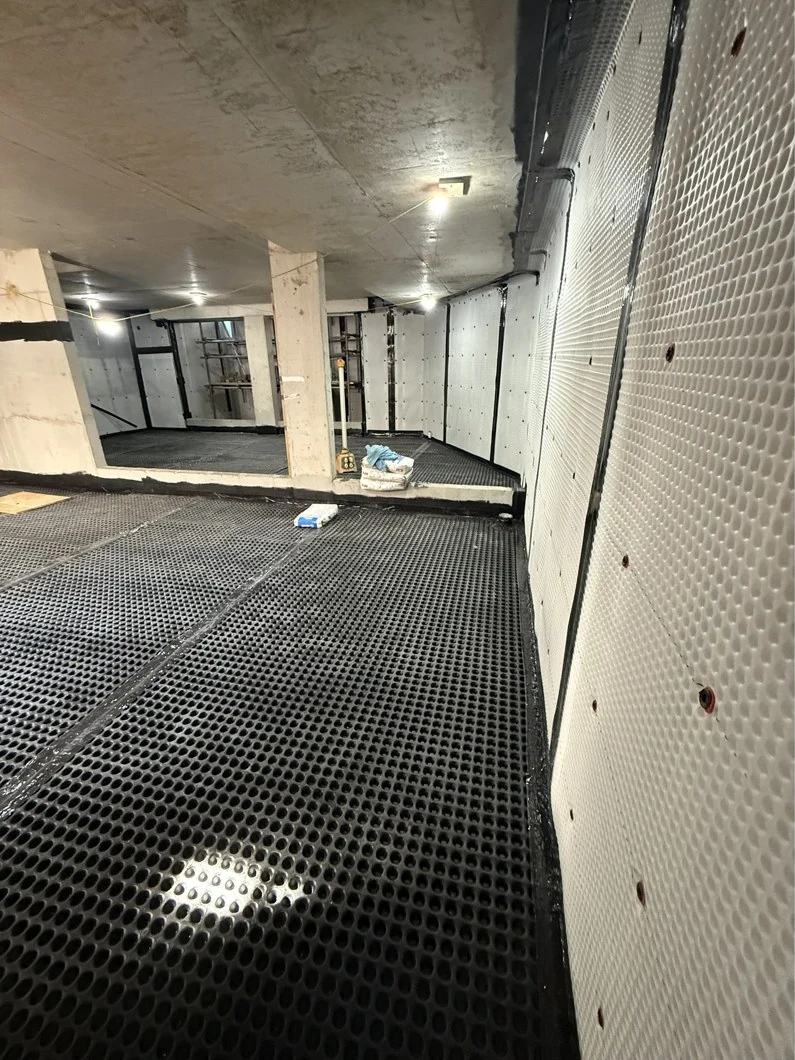
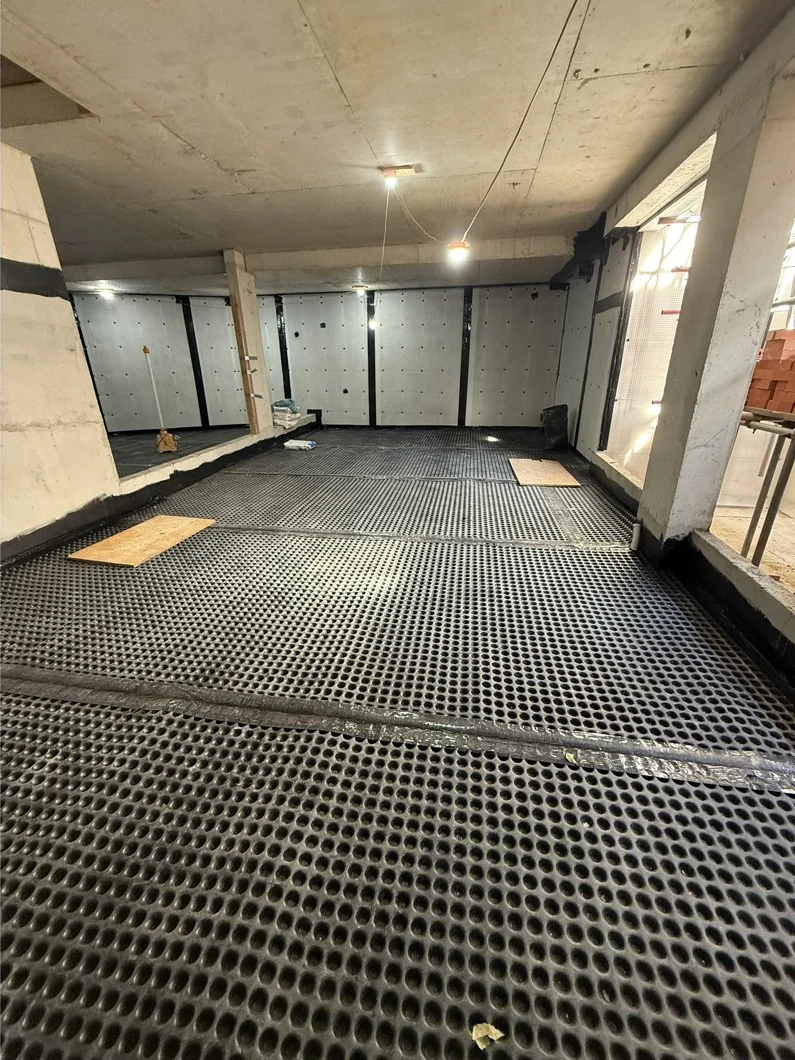
Cavity drain membrane systems
Our most frequently used solution. This approach directs water away instead of depending solely on a barrier. We line the walls and floor with specialist studded membranes. Groundwater passing through the outer masonry enters the space behind them, moves into concealed drainage and is quietly removed by a high-performance sump pump.
You are left with a warm, dry space ready straight away for plastering, decorating or a full basement conversion. BS 8102:2022 describes this as Type C (drained) protection.
2
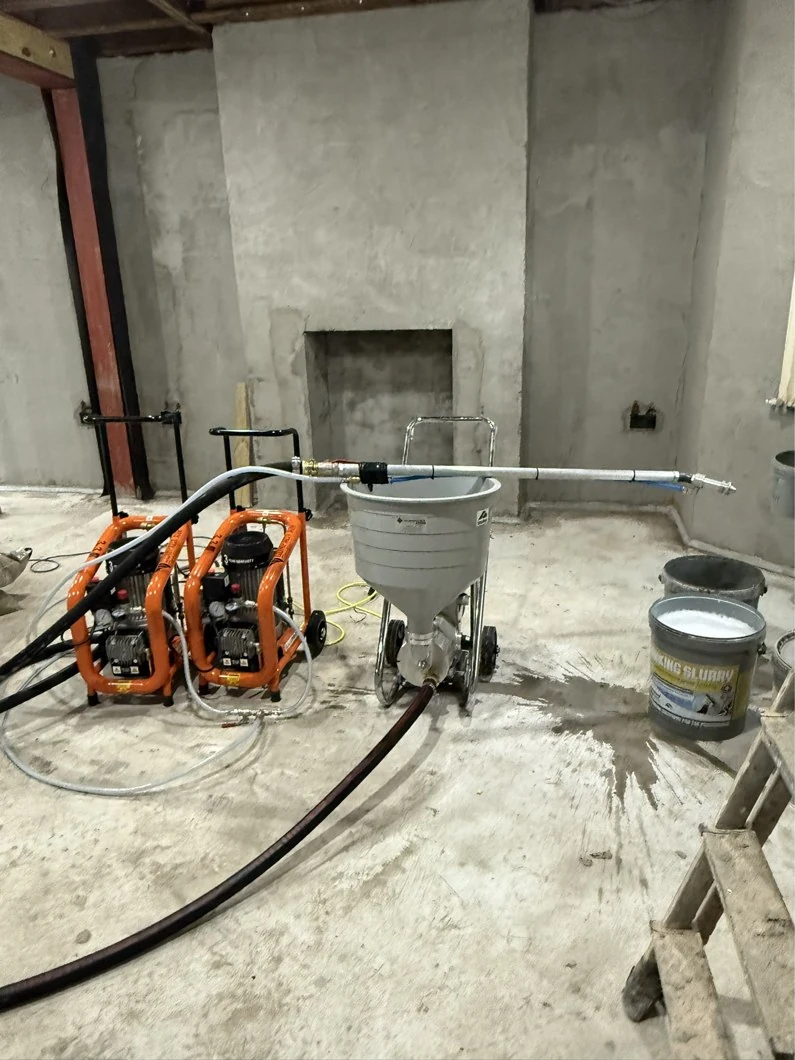
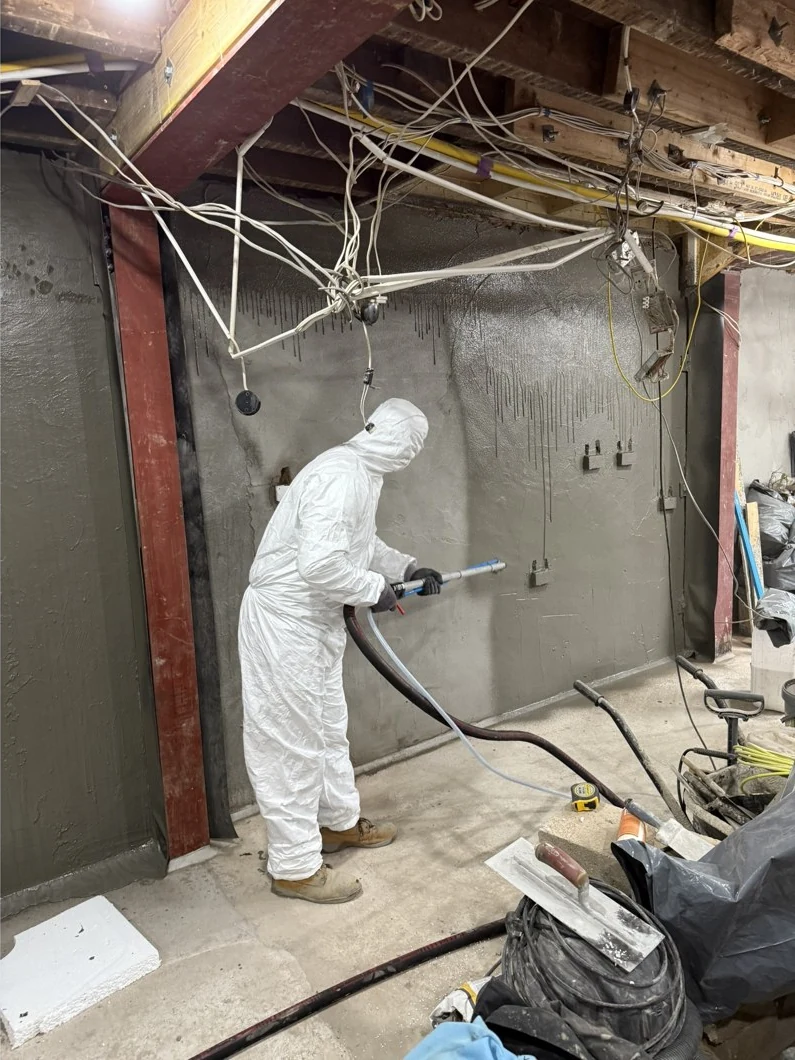
Structural tanking using slurry coatings
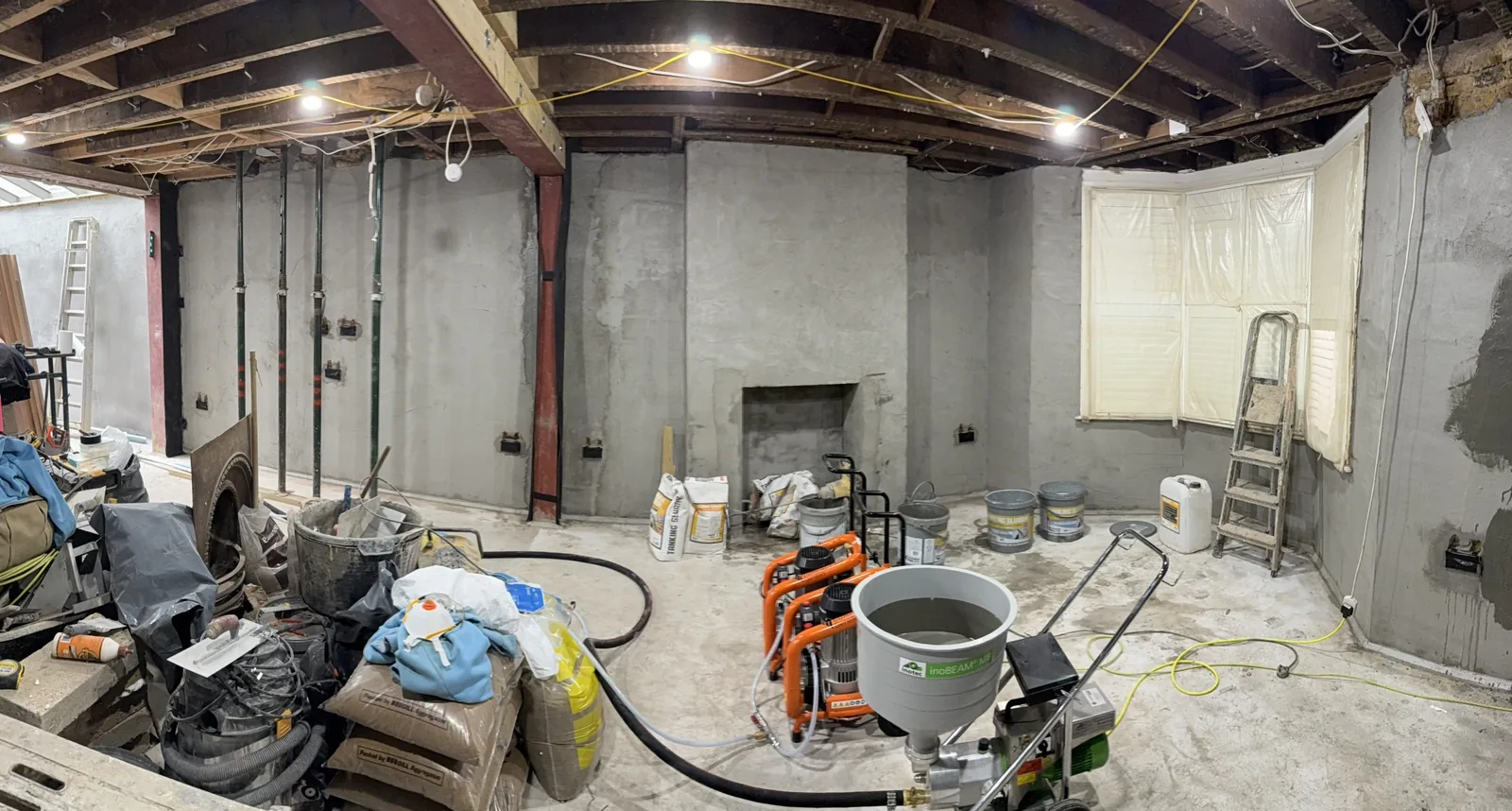
For structures suited to this method, we bond advanced tanking slurries directly to masonry to create a tough waterproof barrier. This is Type A (barrier) protection under BS 8102:2022. Micro-cracks left untreated can undermine standard slurry, so preparation matters:
- We remove existing finishes and clean the walls to expose the bare substrate.
- Visible cracks and mortar defects are made good, with structural crack repair where necessary.
- Specialist primers are applied to stabilise the substrate.
- Carefully applied coats of waterproof tanking render produce a continuous barrier to moisture.
3
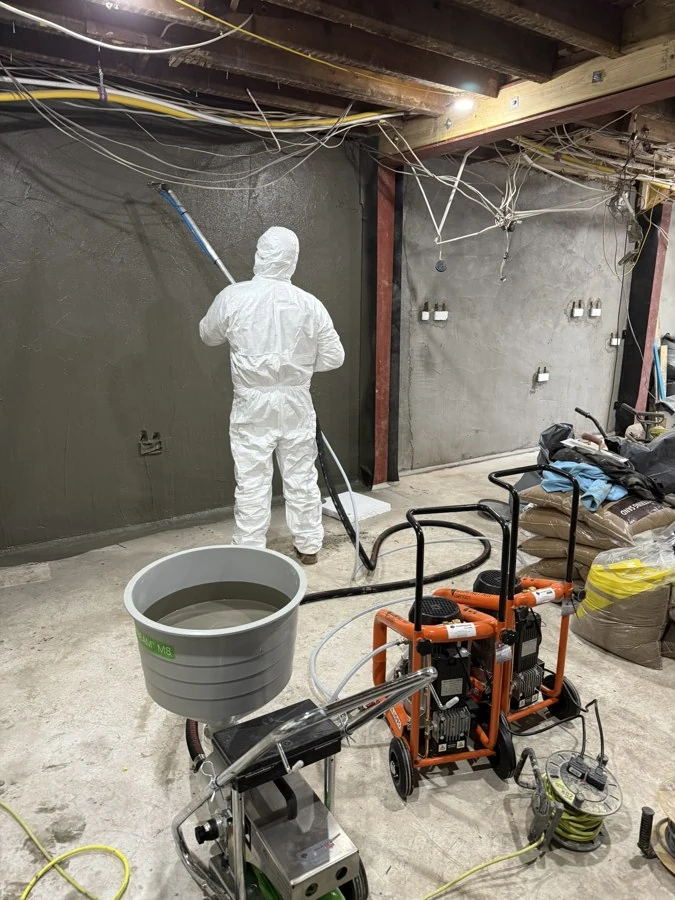
Spray-applied tanking and bitumen coatings
We also use spray-applied tanking for large areas and external structures. The sprayed material forms an even layer of consistent thickness, reaching awkward and uneven surfaces without gaps or thin spots.
- A sound surface first: we use specialist levelling and repair mortars, such as universal mortar, to repair and even out the substrate before spraying. This helps the coating perform as intended.
- Bitumen outside the structure: before backfilling, we spray bituminous waterproofing coatings onto the outer face of retaining walls and foundations and other earth-retaining structures. Groundwater is stopped outside the wall, before it can reach the structure.
- Protection in two layers: we can combine external spray-applied tanking with a cavity drain membrane inside for full A + C protection.
Questions about waterproofing
Basement waterproofing questions and answers
Why are dedicated systems used below ground?
Walls and floors below ground stay in contact with damp soil. Heavy rain or a high water table can push water against the structure under hydrostatic pressure. Damp proofing made for above-ground walls cannot resist that force. BS 8102:2022, the British Standard for below-ground protection, therefore sets out dedicated waterproofing systems.
• Cavity drain membranes direct water out instead of resisting its pressure. Water pressure does not build against finished walls, making this the safest choice for habitable rooms and places with a high water table.
• Tanking slurry bonds to masonry to stop water at the surface. It suits sound, solid walls, lower-risk areas, lightwells and external walls, as well as rooms where every millimetre of space counts.
• Combined systems (A + C) use slurry as the first barrier and a membrane as back-up if water passes it. We often use both in new basements and full conversions. BS 8102 recommends combined protection for higher-risk areas or spaces intended for living in.
What affects the lifespan of each waterproofing system?
• Cavity drain membranes use high-density polyethylene (HDPE). This material resists salts, chemicals and mould and does not rot. Correct installation gives the membrane a design lifespan of decades.
• Sump pumps contain mechanical parts that need care. Depending on system size, we usually recommend a service every 6 months. A maintained pump normally lasts many years; a battery back-up or dual pump keeps the system running during a power cut.
• Tanking slurry is cement-based and lasts for decades on a stable, properly prepared wall. Its lifespan depends on the substrate, which is why we prepare masonry and repair cracks before the first coat.
• Sprayed bitumen coatings on external walls sit under backfill after the ground is reinstated. With a protection board fitted, they last decades without maintenance.
Regular checks and pump servicing help waterproofing perform as well in 20 years as on day one. We offer aftercare packages to support this.
What changes to basement walls and floors should I expect?
• Walls: a cavity drain membrane separates damp masonry from the living space; it does not dry the masonry behind it. Moisture drains through the air gap, preventing pressure from building and pushing the membrane off the wall. Plasterboard can be fixed on battens or by dot-and-dab, while mesh membranes allow direct plastering.
• Floors: we lay a membrane over the existing slab and link it to perimeter drainage channels. Screed or a floating floor then provides a base for tiles, laminate or carpet. The build-up usually takes only a few centimetres of height, which we account for at the survey. XPS floor insulation can add warmth.
• Tanking slurry on walls: bonded directly to the masonry, it adds almost no thickness. Because it holds water at the surface, we repair cracks and other defects to make sure the wall is sound before application.
• The structure itself: both systems protect against continuing water damage, including rusting steel, frost damage, salt staining and mould. They also allow insulation and a warm, healthy finish.
Which guarantees are available, and how long do they last?
Yes. We provide a guarantee for every waterproofing system we install:
• Company workmanship guarantee: our written cover for the installation lasts 10 years.
• Insurance Backed Guarantee (IBG): this policy, provided through QANW, protects your guarantee if the installing company stops trading. It lasts 10 years, transfers to a new owner if you sell your home and is often requested by mortgage lenders and buyers’ surveyors.
• Manufacturer’s product warranty: the waterproofing materials have a 10-year product warranty, also known as a manufacturer’s warranty.
• Sump pump warranty and service plan: the manufacturer covers pumps for up to 2 years. Regular servicing keeps the pump warranty and system guarantee valid.
Your written quotation sets out which guarantees apply to your project, so you know what is covered from day one.
What is the way to book a damp survey in Tottenham?
Use the short form on this page or speak to our specialists on 020 8432 3350 or 07720 752231. We will arrange a survey to establish what is causing the damp, then provide a written quotation explaining the proposed system and applicable guarantees.
Our product manufacturers
Premium products selected for each building
Protecting your home means refusing to compromise on quality. Crystal Damp Proofing & Basements Ltd uses proven products from leading manufacturers, selecting what suits the building instead of relying on one system for every project.
Wykamol
Sump pumps alongside tanking slurries and cavity drain membranes.
NEWTON
Newton
Pumps, drainage and systems using cavity drain membranes.

Delta
Studded wall and floor membranes designed for high performance.

Mapei
Mortars for repairs and levelling, plus waterproofing coatings.
Biokil
Products for damp proofing and protecting property.
Spotting basement damp
Could your basement need waterproofing?
Addressing damp early can prevent expensive structural problems. A home may be at risk if it is an older property without protection in the foundations or lies in an area with a high water table.
Our specialists identify the underlying cause and recommend an appropriate solution. It may be penetrating damp, rising damp, poor insulation or inadequate rainwater drainage. We use thermal imaging to trace damp that is out of sight.
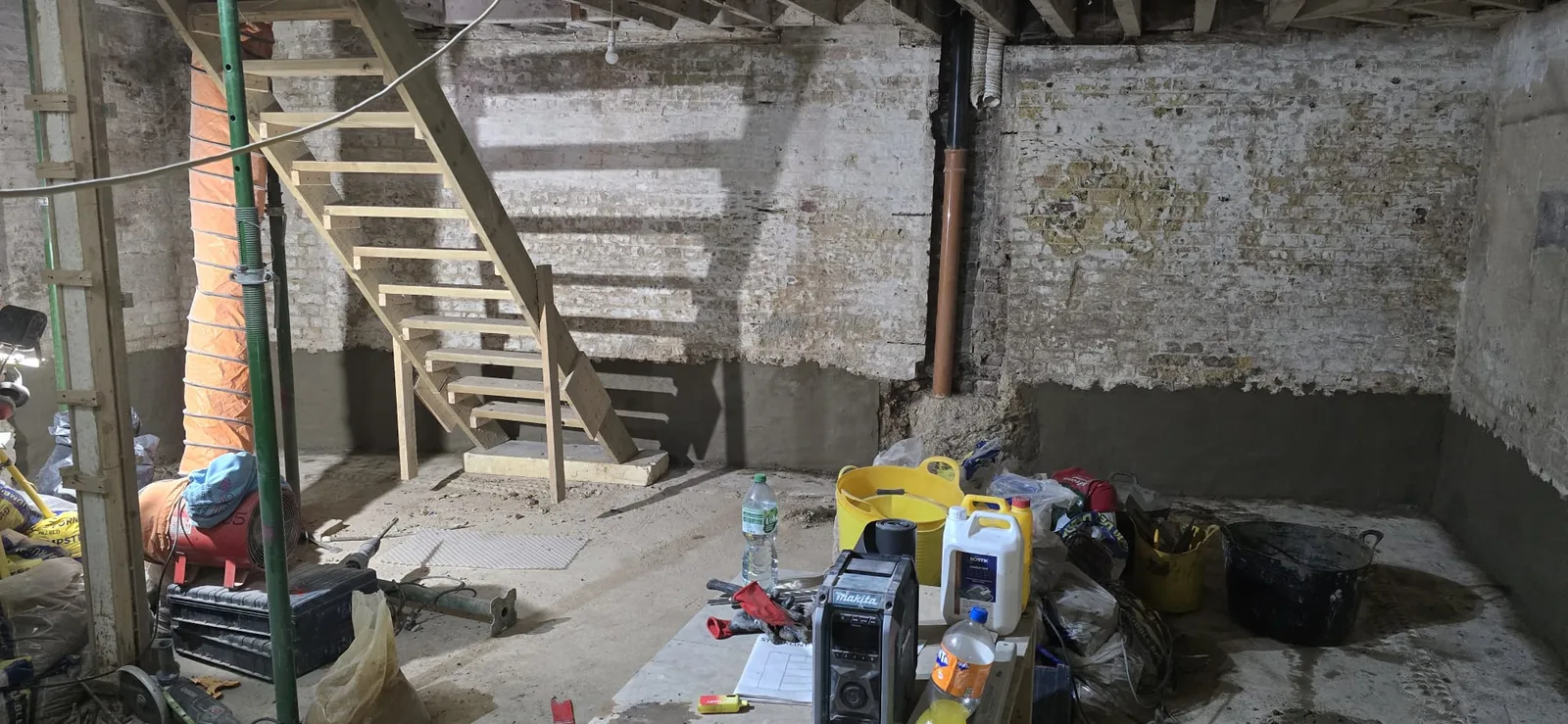
Projects in pictures
A look at our basement waterproofing work
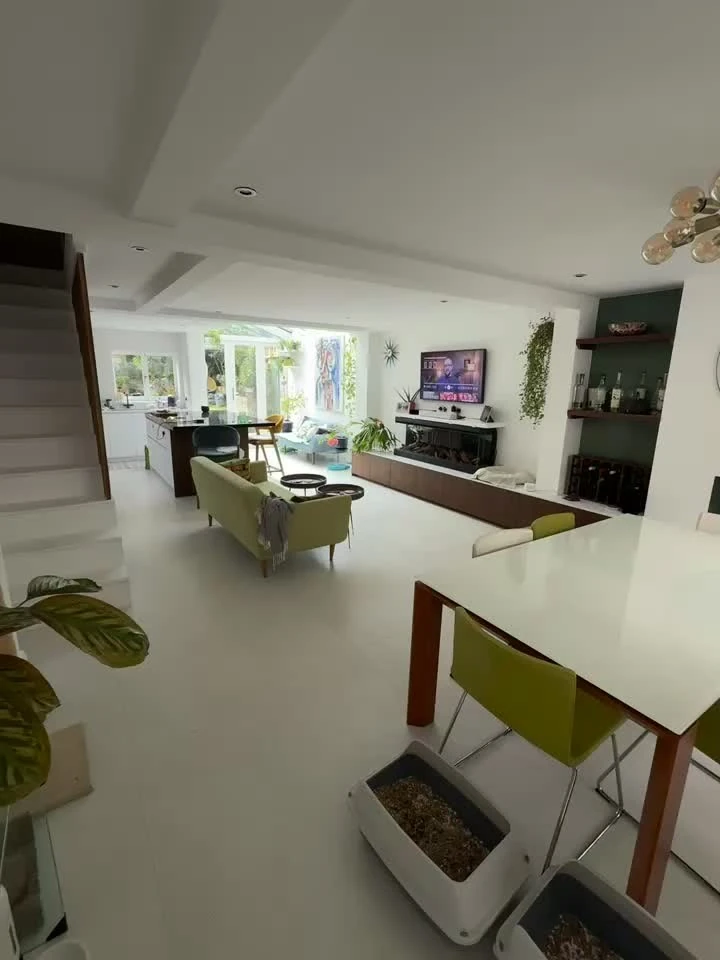
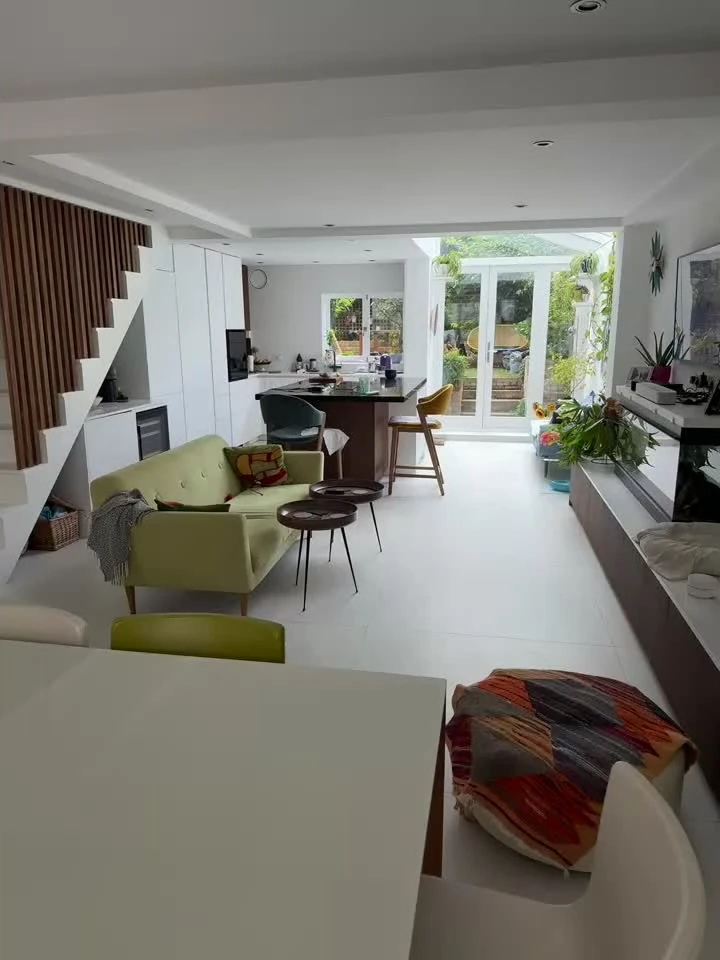
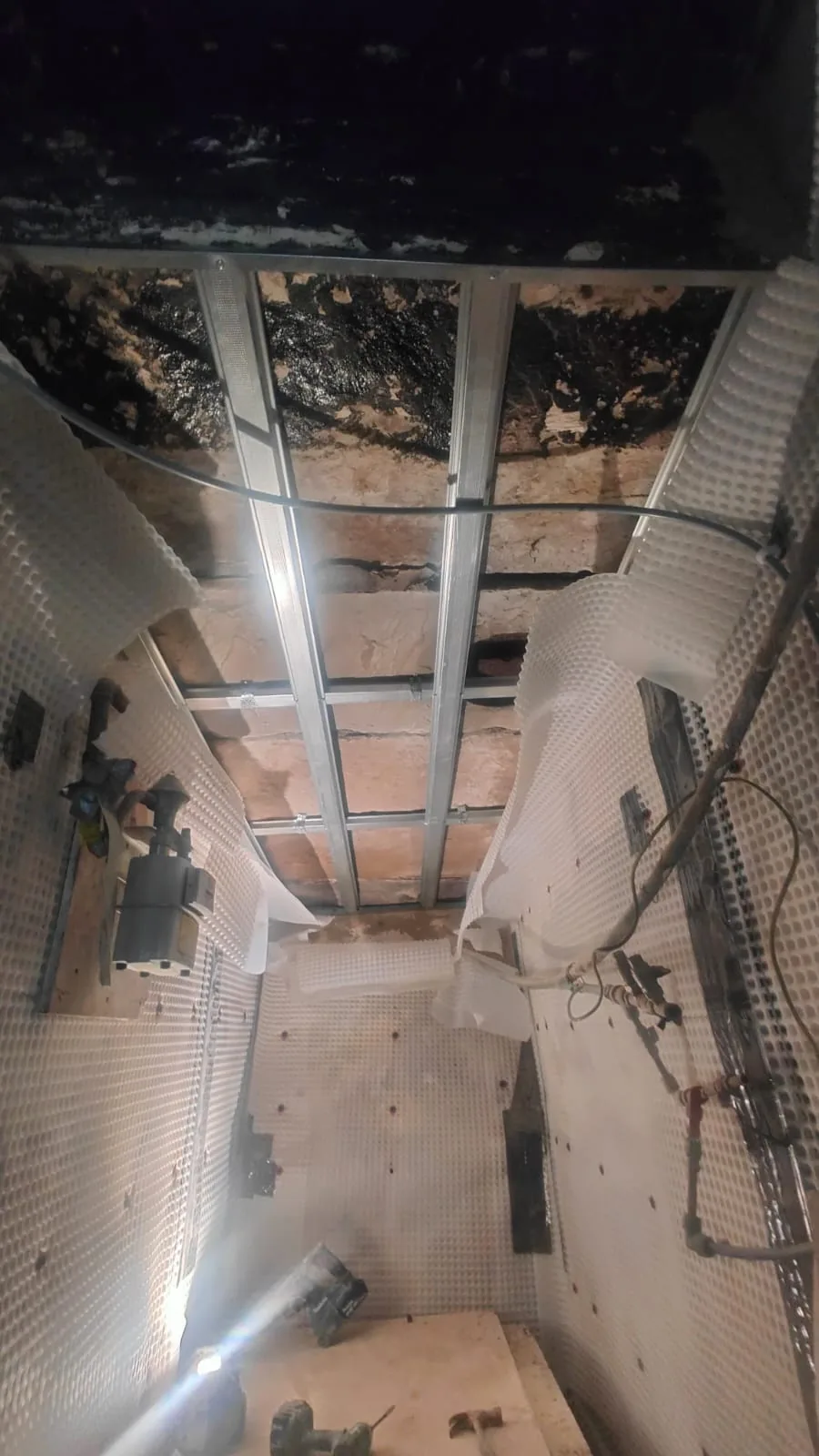
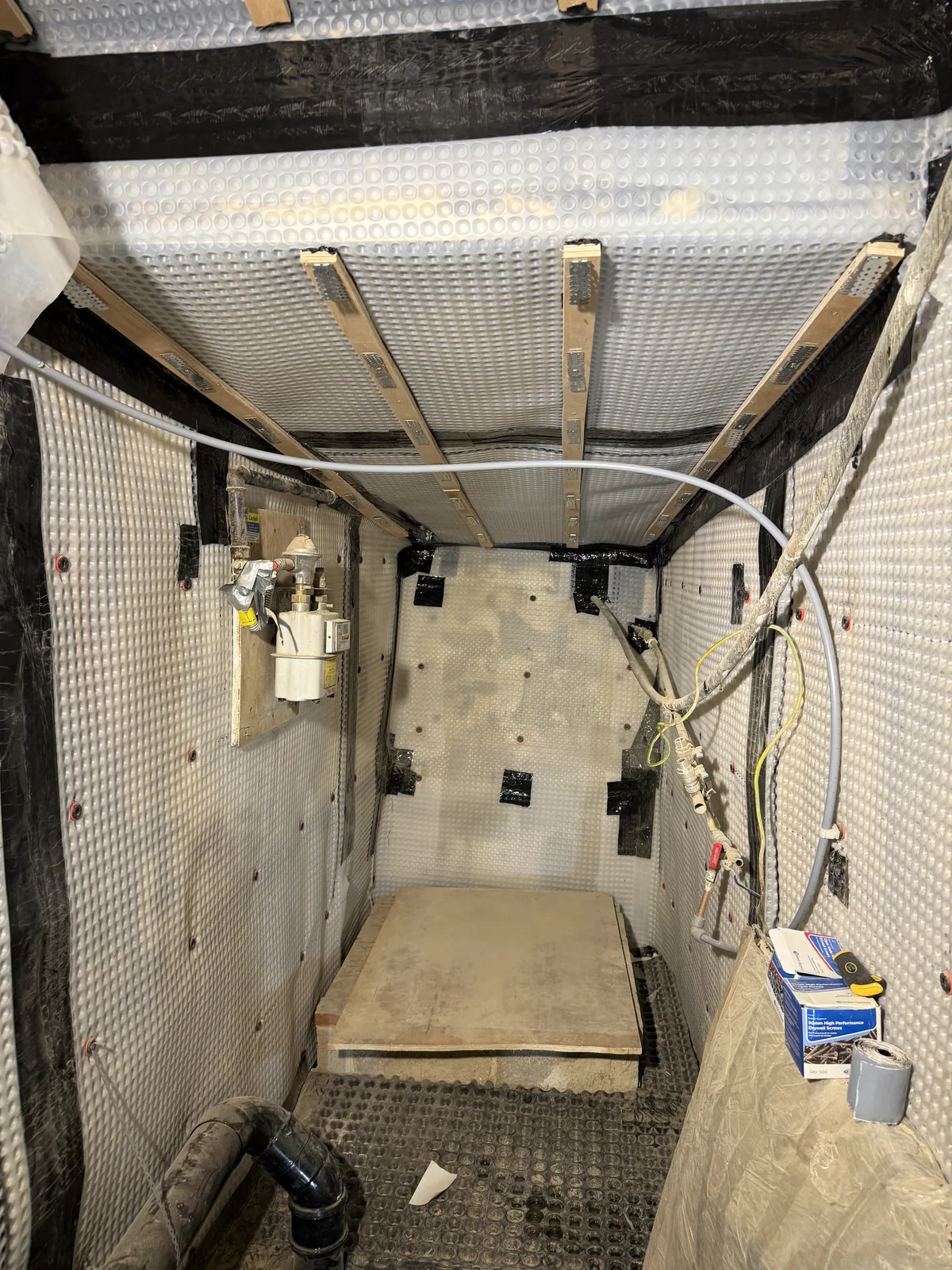
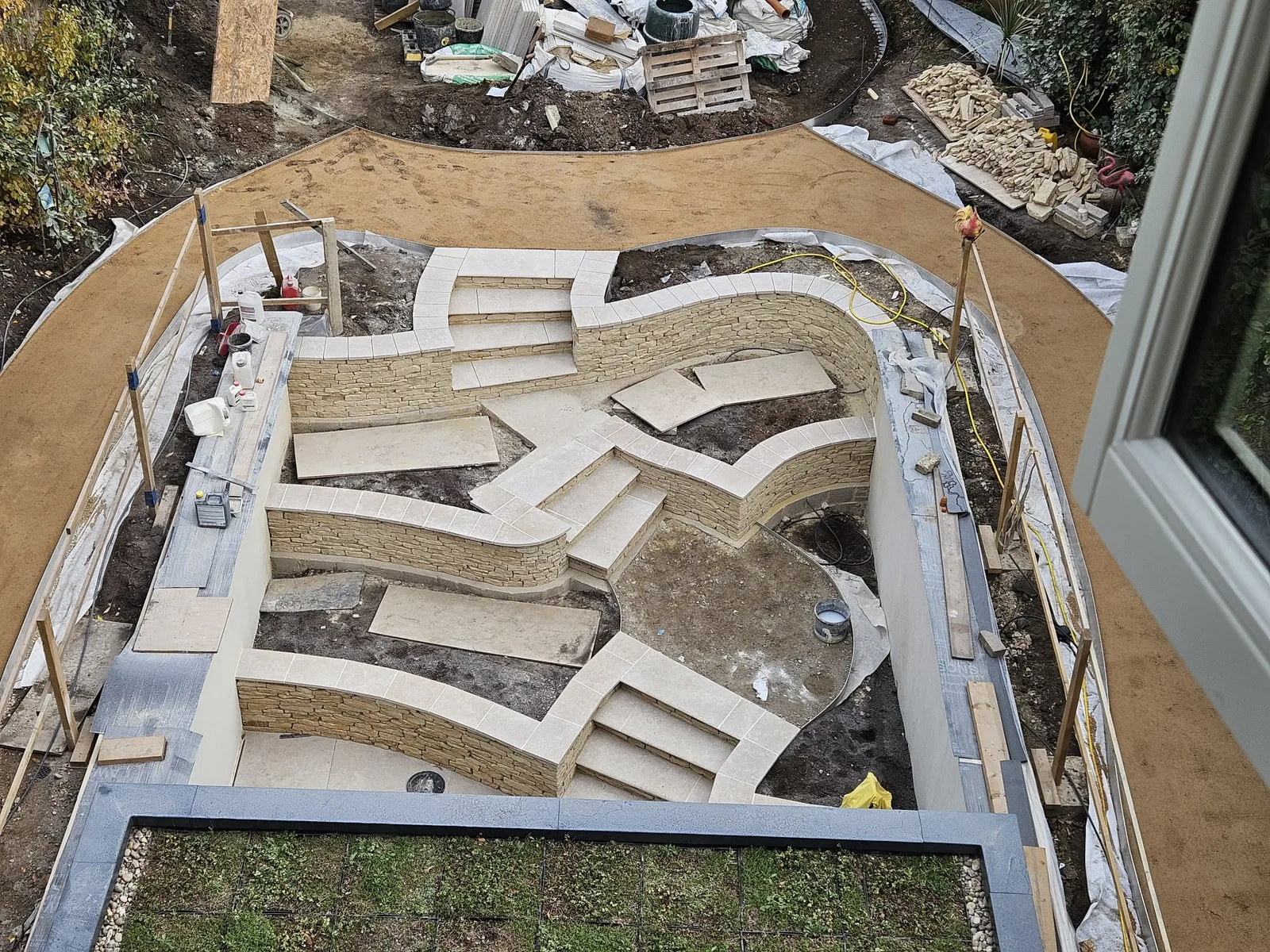
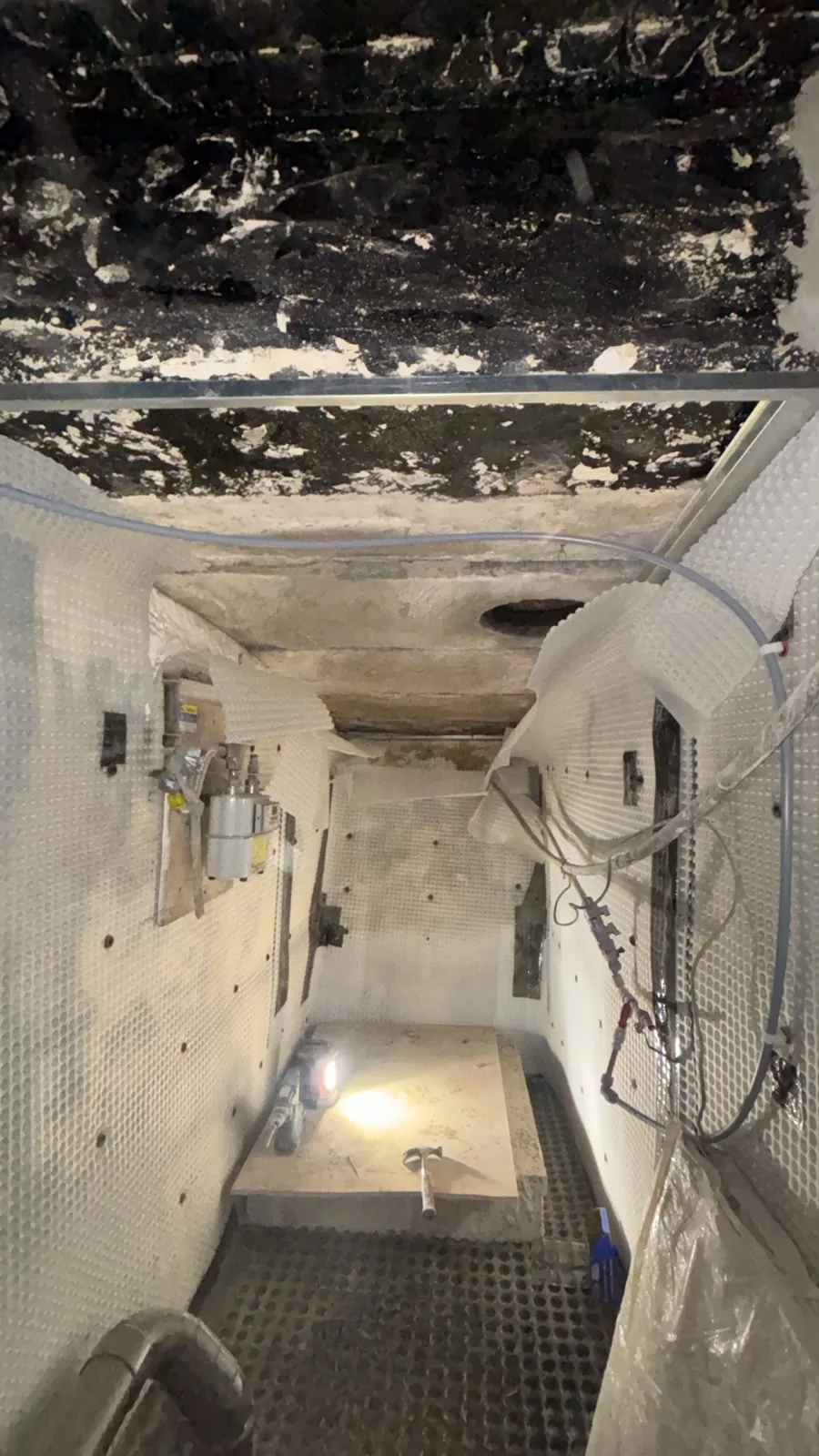
See photographs from our own waterproofing projects: vaults lined with membranes, sump installations and lightwells during construction.
Services that work together
Supporting protection for below-ground spaces
Our other specialist services can complement waterproofing; find out how the systems operate on our basement waterproofing technology page.
Basement Waterproofing Technology
Understand Type A alongside B and C.
Basement Conversion & Waterproofing
Make living space from a damp cellar.
Spray-Applied Basement Waterproofing
Consistent coating across extensive areas.
Retaining Wall & Foundation Waterproofing
Outside surfaces protected ahead of backfilling.
Sump Pump System & Services
Sump pumps installed and maintained.
Structural Cracks Repair
Repair masonry to prepare it for tanking.
Basement Floor & XPS Insulation
Add warmth above the existing slab.
Iso-Therm Membrane & Black Mould
Wall lining where cold and mould are problems.
Thermal Inspection
Trace moisture hidden from sight.
Penetrating Damp
Deal with water entering through walls.
Rising Damp
Address moisture rising from the ground.
Insurance-Backed Guarantee & Product Warranty
Protection passed to a new owner on sale.
What our clients say
Feedback from Crystal Damp Proofing & Basements clients, as published on our testimonials page.
They carried out basement damp-proofing for us and did a fantastic job. I had a lot of issues with damp and the basement was in very poor condition, but fortunately I found this company. […] Well done — I highly recommend them.
Although we had cheaper quotes, the quality Crystal delivered was on another level — worth every penny. They were friendly, reliable, and exceptionally thorough.
To Whom it may concern, I would like to say a huge thank you to Lukasz and his team who carried out the damp proofing at my house. Their work can only be described as professional, quick and hassle-free. House was cleaned each day, all rubbish was taken away.
Free survey
Request a damp survey in Tottenham
Start working towards a completely dry basement. Complete the quick form to book a damp survey, or speak with our specialists today on 020 8432 3350 or 07720 752231.
07720 752231
Request your damp survey
Please complete the fields marked *. We will get in touch after receiving your details to arrange the survey.
Considering the local property
A considered approach to basements around Tottenham
Checking the water table
Assessing older foundations
Considering lightwells
Beginning with a survey
Across Tottenham, a basement’s response to water depends on the individual property. Ground may remain damp, water may appear after heavy rainfall, or an older building may lack foundation protection. We inspect the space rather than assuming one waterproofing method will suit it.
The survey examines where moisture appears, how the walls and floor are constructed and whether the weather changes the problem. A lightwell or accessible external wall may allow external coatings to help. If water pressure is likely, an internal drained system provides the most reliable result.
Your written quotation explains why we recommend a cavity drain membrane, tanking slurry or a combination of both for your property.
From survey to aftercare in Tottenham
A basement waterproofing project in Tottenham follows these stages, from the initial visit through to aftercare.
- Survey: we investigate the cause of damp and use thermal imaging to trace moisture that is hidden.
- Written quotation: you receive a clear explanation of the recommended system and the guarantees that apply.
- Preparation: we strip walls, make good cracks and level surfaces before applying the system.
- Installation: our own specialists fit the membranes, tanking or spray-applied coatings.
- Aftercare: regular pump servicing helps the system keep working; we also cover South Tottenham, Upper Edmonton, Wood Green and Palmers Green.
Care at every stage
Make a start on a dry, usable basement
Arrange your damp survey online or speak to our specialists today on 020 8432 3350.
Qualified Specialists & a 10-Year Guarantee
Our family-run team holds CSSW qualifications, with a minimum of 10 years’ experience each. We back every job in Tottenham with a 10-year guarantee covering workmanship, plus a QANW Insurance Backed Guarantee that transfers to the new owner if you sell your property. We work on domestic and commercial properties in Tottenham and across London and the South East.

See What Our Clients Say
★★★★★ Rated 5 stars on Google
We are proud of our 5-star Google rating: see our reviews. If your basement or property in Tottenham is damp or takes in water, book a survey in our Booking Survey section, or call or message our fully qualified advisors.
Our coverage
Basement waterproofing around Tottenham
In Tottenham and nearby areas including South Tottenham, Upper Edmonton, Wood Green and Palmers Green, Crystal Damp Proofing & Basements Ltd waterproofs basements, cellars and vaults. Select an area below to visit its local page.