


Structural Cracks Repair
Stabilise your walls permanently, without demolition and months of building work!
Cracks in walls are not just a cosmetic problem. They are a sign that the structure of the building may be losing stability. Hairline cracks can widen over time, weakening the walls and letting in water. At Crystal Damp Proofing & Basements Ltd, we find the cause of the cracking, repair it properly and make sure it does not come back. There is little point in insulating or redecorating a building while its walls are still cracking.
Why Do Walls Crack?


- mistakes made when the foundations were built,
- a poorly designed or built roof structure,
- uneven settlement of the ground,
- building work on neighbouring properties,
- heavy traffic and vibration,
- changes in groundwater and soil conditions.
Step 1: Diagnosis and Safety
Repairing the cracks without dealing with their cause means they will come back. That is why every repair starts with a diagnosis:
- Working with a structural engineer: together with our structural engineers, we establish the cause of the cracking, such as ground settlement, construction defects or overloading, and prepare a technical report or repair design.
- Crack monitoring: we fit crack monitors (glass, plaster or digital tell-tales) to check whether a crack is still “live” and growing, or whether the movement has stopped.
Step 2: Structural Strengthening (Where the Cause Lies in the Ground or Structure)
- Underpinning: needed when the building is settling. It can be done with mass concrete, mini-piles or geopolymer resin injection into the ground.
- Wall ties and lintel replacement: these restore the integrity of the building and secure window and door openings.
Step 3: Repairing the Cracks Themselves

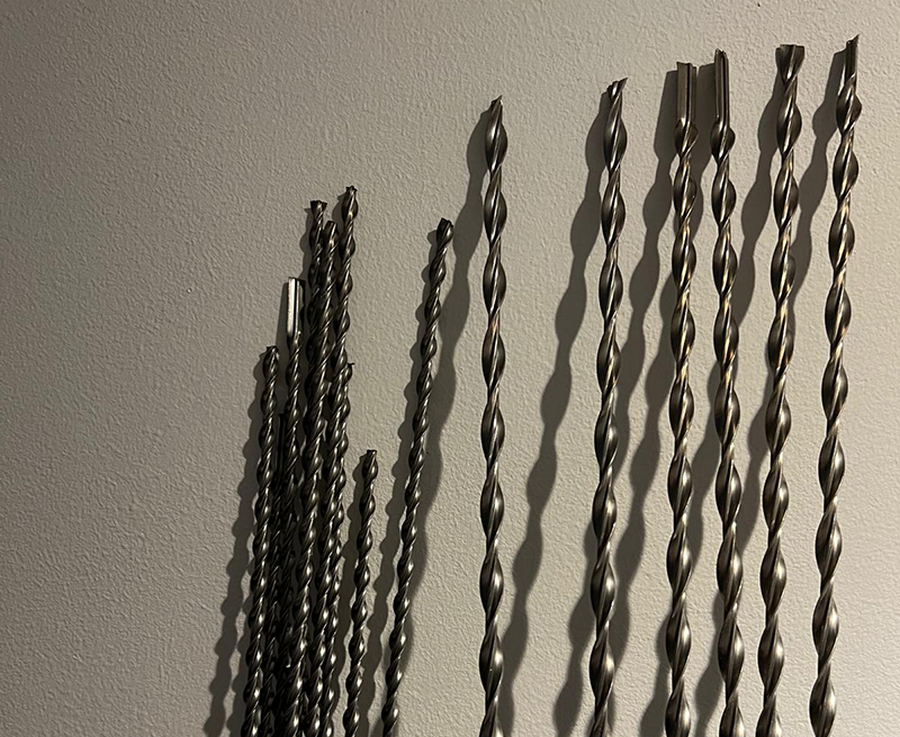
- Helical bar crack stitching: an excellent, minimally invasive method for brick and block walls. Stainless steel helical bars bonded into the mortar joints take up the tensile stresses across the crack.
- Resin injection: epoxy resins are used to bond cracked concrete structurally and rigidly, giving a repair stronger than the concrete itself. Polyurethane resins are flexible and ideal for basements, because they foam on contact with water and seal it out.
- Rebuilding and repointing: the traditional repair for badly damaged sections of wall, where stitching alone is not enough.
Step 4: Sealing and Waterproofing Below Ground
Cracks in basements are a natural route for groundwater. We first stop the leaks, for example with curtain or structural injection, and only then restore the vertical or horizontal waterproofing.
How Helical Bars Work
Helical bars are stainless steel rods formed into a spiral. Once bonded into the wall, they work together with the structure to:
- carry tensile and shear stresses across the crack,
- restore the continuity and load-bearing capacity of the damaged wall,
- spread stresses over a larger area of the wall,
- reduce the risk of new cracks forming in the repaired area.
How We Install Helical Bars
- Cutting the slots: we cut horizontal slots into the mortar joints across the crack, around 5–6 cm deep, typically every 3–4 brick courses or as set out in the repair design. Each slot extends at least 75 cm either side of the crack.
- Cleaning the slots: we remove all dust and debris, dampen the masonry where needed to improve adhesion, and apply a bonding coat if required.
- Installing the bars: we apply a first layer of specialist grout to the back of the slot, press in a helical bar of the right diameter (usually 6–10 mm), slightly shorter than the slot by 2–3 cm, and cover it with a further layer of grout so the bar is fully encased.
- Finishing: once the grout has set, we fill the slot with a material that matches the existing surface, such as render or pointing mortar, so the repair is practically invisible.
Bars are staggered vertically by around 10–15 cm, and on thicker or cavity walls they may need to be installed on both sides. The repair design sets out the minimum number and position of the bars for each case.
Why the Right Number of Bars Matters
Think of a rope made of many thin fibres. It can hold a heavy load precisely because all those fibres work together. Remove most of them and the rope snaps, even though “something” is still there. A cracked wall works the same way: if only two bars are fitted instead of five or six, because it is “cheaper” or “less work”, they cannot hold the wall together. The stresses keep working, the cracks get worse and the money spent is wasted.
The same applies to the bonding material. Ordinary tile adhesive is not a substitute for specialist helical bar grout. It does not have the right bond, flexibility or durability, and a “cheap” shortcut often ends in a second, properly done repair at double the cost. With structural repairs, there is no room for half measures: we do it properly, with the right number of bars and the right materials, in line with the repair design.
Why Choose Helical Bar Repairs?
- An invisible finish: once finished, the repair is practically invisible.
- Fast installation: using standard building tools, with little dust and disruption.
- Lasting strength: permanent reinforcement without major demolition.
- New and historic buildings: suitable for new builds as well as period and listed properties.
- Minimal intervention: very little disturbance to the structure of the building.
Qualified Specialists & a 10-Year Guarantee

See What Our Clients Say
We are proud of our 5-star Google rating: see our reviews. If your basement is damp or takes in water, book a survey in our Booking Survey section, or call or message our fully qualified advisors.
